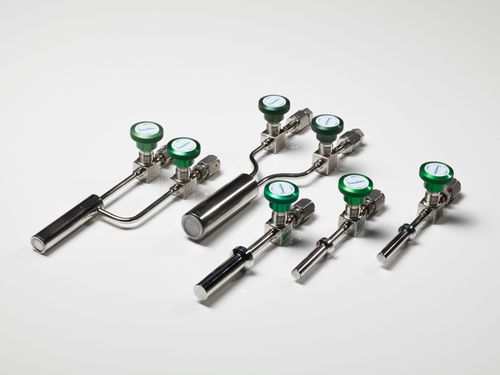
RC Tritec U-beds contribute to City Labs’ historic BOHR mission
14.09.2026
In July 2026, City Labs launched BOHR (Betavoltaic Orbital High-Reliability) aboard SpaceX Transporter-17 – the world’s first commercial nuclear-powered satellite and the first nuclear CubeSat.
The mission demonstrates City Labs’ NanoTritium™ betavoltaic technology in orbit, providing continuous, long-duration electrical power for the demonstration payload independent of sunlight. The technology opens exciting possibilities for applications where conventional power sources reach their limits, including deep-space missions, permanently shadowed regions of the Moon, and long-duration autonomous sensor systems.
We are proud that RC Tritec U-beds were used by City Labs in connection with the BOHR project.
For us, contributing to such a pioneering project is another fascinating example of the diversity of tritium applications. From scientific research and hydrogen isotope handling to advanced energy technologies and now space applications, our products support customers working with tritium across a remarkably broad range of fields.
We congratulate the entire City Labs team on this achievement and are delighted that RC Tritec technology could play a part in this exciting project.
More about the BOHR mission:
City Labs: City Labs to Launch First Nuclear-Powered Satellite, BOHR
World Nuclear News: First commercial nuclear-powered satellite launched - World Nuclear News
Text us if you would like to know more about it.
- +41 71 335 73 73
- sales@rctritec.com